


Kaede Kishino


New Topics
Kaede Kishino (Deaf Rugby) has been certified as an Inagi City Hometown Athlete!
We have certified Kaede Kishino, a resident of Inagi City who has been selected as a member of the Japanese national team for the 3rd 7-a-side Deaf Rugby World Cup to be held from October to November 2026, as an Inagi City Hometown Athlete.
Kaede Kishino (Inagi City Hometown Athlete)
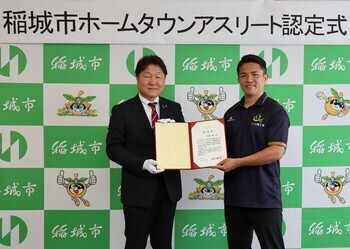
Certification Date
Monday, May 11, 2026
Department
Deaf Rugby Player
Profile
Born on November 6, 1997. Resident of Inagi City.
Career
- Born with sensorineural hearing loss, started playing rugby from elementary school.
- Began playing deaf rugby while attending Waseda University; during university years, balanced activities between the hearing rugby club and deaf rugby.
- April 2026: Selected as a member of the Japanese national team for the 3rd 7-a-side Deaf Rugby World Cup.
Main Achievements
- 2018 1st 7-a-side Deaf Rugby World Cup (Australia) 4th place
- 2020 Won the university championship with Waseda University Rugby Football Club
- 2023 2nd 7-a-side Deaf Rugby World Cup (Argentina) Participated as captain of the Japan national team, 7th place
- 2025 1st Pacific Rim Deaf Rugby Sevens 4th Place
About Deaf Rugby
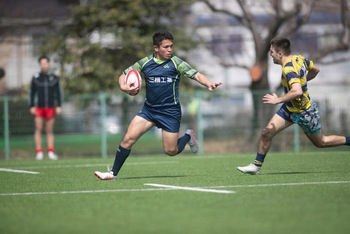
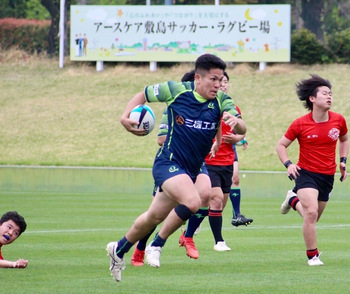
Deaf rugby, played by hearing-impaired athletes, has been ongoing since around the 2000s, with the first world tournament held in 2002.
The game is played under the same rules as regular rugby, but communication between players and referees is conducted using sign language, and visual signals such as flags or towels are used instead of whistle signals.
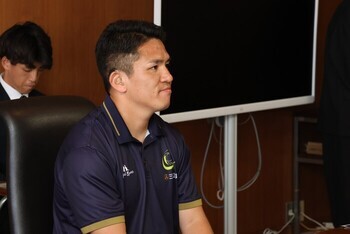
Interview (May 2026)
How do you feel about being recognized as a Hometown Athlete of Inagi City?
I feel very honored and at the same time, I also feel a great responsibility. Understanding within myself the meaning of representing Inagi City in my activities, I hope to deliver good results by winning the world championship and report back in a way that can give energy and courage to the citizens.
Since when have you been living in Inagi City?
Since 2023, my second year as a working adult. My wife's family home is in Inagi, and I also had the wish to "live together in Inagi," so we moved here accordingly.
What got you started with rugby and deaf rugby?
It all started when I went to the local rugby school where my father was a coach, back when I was in the second grade of elementary school. At first, I was very scared of contact sports, but when I participated in practice and scored a try, my teammates praised me a lot, and that’s when I realized, "Rugby is this much fun." That was the trigger.
The first time I learned about deaf rugby was when I watched a match of the Japan national deaf rugby team in my third year of high school. In my second year of university, I was invited to join deaf rugby through an acquaintance's influence. While attending university, I balanced playing rugby with hearing players and deaf rugby.
What has been difficult about continuing to play rugby?
When I was playing rugby with hearing players, everyone around me communicated by voice, but since I am deaf, it was very difficult to get information and keep up with the play using only visual cues. Because of this, I have valued taking the initiative to communicate actively myself, as I would not understand what my teammates were saying at all otherwise.
What challenges do you face in balancing work and sports?
Managing time and physical strength is very difficult. While working full-time, I also have rugby practice on weeknights. Of course, there are times when I think, "I don't want to go to practice today," but I remember that I am in a position where many people support me, and I push myself to practice.
Please share your enthusiasm for the Deaf Rugby World Championship.
This is the first time it will be held in Japan. Since we have the support of many people, I want to achieve a great result by winning the championship. I will do my best to play in a way that conveys the appeal of Deaf Rugby.
Please tell us your thoughts on promoting deaf rugby.
I feel that deaf rugby and deaf sports are still not very well known. By using my ability to communicate, I want to give lectures and talks in various places to convey the enjoyment of deaf rugby and what the world of those who cannot hear is like. I also want children in Inagi City to learn about the benefits of deaf rugby and contribute to creating an environment where people with disabilities can enjoy rugby.
When watching a deaf rugby match, how can spectators cheer in a way that conveys their feelings to the players?
If you applaud, wave towels, or use boards to cheer visibly, the players can see it clearly and it makes them very happy.
What is important to become an athlete who can succeed globally, not just in rugby?
In rugby, skills and physical strength are important, but even more so, I believe that "the power to continue" and "the power to believe in yourself" are crucial. Rugby practice involves contact and is very hard and often tough, but I feel the importance of persevering through it.
I believe that in order to fully demonstrate all the abilities you have on a big stage like the World Championship, it is important to continue the small daily efforts until you reach a level where you can trust yourself.
If you slack off even for one day, your performance will decline immediately, so I place great importance on daily training and accumulation. I think that is connected to my current "ability to continue."
This page is managed by the Department of Industry, Culture, and Sports Sports Promotion Section
2111 Higashi-Naganuma, Inagi City, Tokyo 206-8601
Phone number: 042-378-2111 Fax number: 042-379-3600
Contact the Sports Promotion Section, Department of Industry, Culture, and Sports, Inagi City