


Proper Disposal of Lithium-Ion Batteries


Lithium-ion batteries (small rechargeable batteries) and products containing them pose a fire hazard!
Many rechargeable small appliances (such as mobile batteries, handheld fans, electric toothbrushes, and heated tobacco products) use lithium-ion batteries.
Lithium-ion batteries can generate intense heat and catch fire if excessive force is applied, making them extremely dangerous.
In recent years, fires have been rapidly increasing in garbage collection trucks and recycling processing facilities.
When disposing of unwanted rechargeable small appliances, please ensure proper disposal and recycling to avoid any danger.
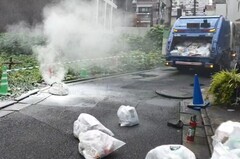
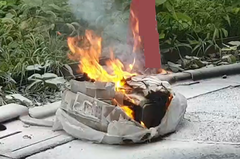
Fire Incidents in Inagi City
In Inagi City as well, a fire occurred inside the pit at the Tama River Clean Center on Friday, June 27, 2025.
The exact cause has not been identified, but it is quite possible that lithium-ion batteries mixed in with the garbage were involved.
Depending on the scale of the fire, extensive repairs may be necessary, and waste disposal may be unavailable for an extended period.
Points to Prevent Fires
- When disposing of rechargeable appliances, be sure to check the product's instruction manual carefully.
- When disposing of unwanted items, be sure to check the waste separation methods.
How to Dispose of Lithium-Ion Batteries
In the Case of a Swollen Lithium-Ion Battery
- Please put out your "hazardous waste" in transparent or semi-transparent bags once a month.
- Please insulate the terminals with tape or similar before disposal.
For batteries with terminals not exposed, please wrap them thoroughly with tape or similar.
(Terminals may become exposed if the swelling progresses.)
Note: Please follow the same disposal method for swollen lithium-ion batteries.
In the case of normal lithium-ion batteries (those that are not swollen)
In the case of lithium-ion batteries only
- Please put out your "hazardous waste" in transparent or semi-transparent bags once a month.
- Please insulate the terminals with tape or similar before disposal.
- Small rechargeable batteries are also collected in recycling boxes at designated recycling partner stores.
Please search for and confirm recycling partner stores on the website of the Japan Battery Recycling Center (JBRC).
In the case of household appliances with built-in lithium-ion batteries that cannot be removed
- Approximately less than 50 cm: Insulate the terminal parts with tape, etc., and dispose of them by one of the following methods.
1. On the "hazardous waste" day once a month, put it in a transparent or semi-transparent bag and dispose of it.
2. Put it in the "Small Electronic Device Collection BOX" located at 11 places in the city. - For items 50 cm or longer: Please dispose of them as "bulky waste." (Reservation required)
Related Links
Special Site for Information on Fire Prevention Caused by Lithium-Ion Batteries
Ministry of the Environment Special Site
Awareness Videos
-
YouTube - Let's eliminate lithium battery fires! (Long ver.) (Source: Ministry of the Environment) (External link)

-
YouTube - Let's eliminate lithium battery fires! (Short ver.) (Source: Ministry of the Environment) (External link)
This page is managed by the Urban Environment Management Department, Living Environment Division
2111 Higashi-Naganuma, Inagi City, Tokyo 206-8601
Phone number: 042-378-2111 Fax number: 042-377-4781
Contact the Living Environment Division, Urban Environment Management Department, Inagi City