


Let's dispose of "small rechargeable batteries" and "small electronic devices with non-removable rechargeable batteries" on the "hazardous waste" day.


Please double-check the sorting before putting out your garbage!
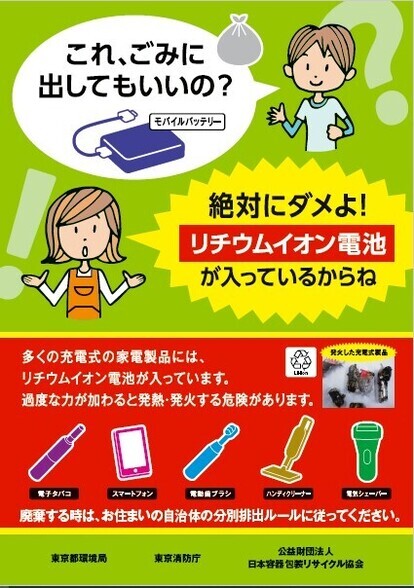
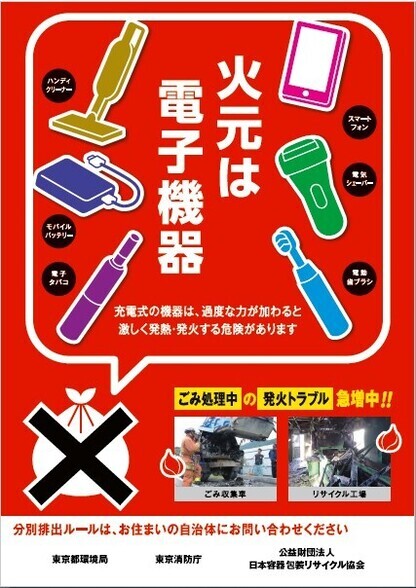
In recent years, there have been many fires from waste disposal facilities and garbage collection vehicles in the Tokyo area.
The cause is believed to be that rechargeable batteries such as lithium-ion batteries mixed in with non-burnable waste were crushed by shredders at processing facilities or by the press plates of collection vehicles, causing them to heat up and ignite.
When a fire occurs, it can lead not only to damage to machinery and accidents involving workers but also to delays in collection and the suspension of deliveries to facilities.
Before putting out the garbage, please check once again to ensure it is properly sorted.
What is a small rechargeable battery?
Unlike disposable batteries (primary batteries), these are small and lightweight rechargeable batteries (secondary batteries) that can be used repeatedly after charging, including lithium-ion batteries, nickel cadmium batteries, and nickel metal hydride batteries.
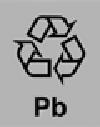
Manufacturers of small rechargeable batteries, manufacturers using small rechargeable batteries, and their importers are required to collect and recycle them, and a recycling mark is displayed on the batteries and the electronic devices themselves.


Items that can and cannot be collected by the city
Items that can be collected
The following small rechargeable batteries and electronic devices from which they cannot be removed
- Lithium-ion battery
- Nickel Cadmium Battery
- Nickel Metal Hydride Battery
Items that cannot be collected
- Lead-acid batteries and electronic devices from which they cannot be removed
⇒ Please consult the retailer or manufacturer when disposing of these.
How to Dispose of Small Rechargeable Batteries
- Please put out your "hazardous waste" in transparent or semi-transparent bags once a month.
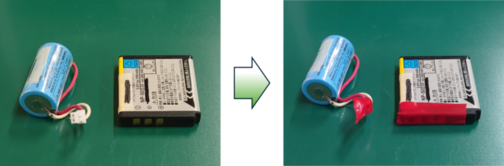
- Please insulate the terminal parts with tape or similar before disposal. (See photo)
- Small rechargeable batteries are also collected in recycling boxes at designated recycling partner stores.
Please search and check the designated recycling partner stores on the website of the General Incorporated Association JBRC.

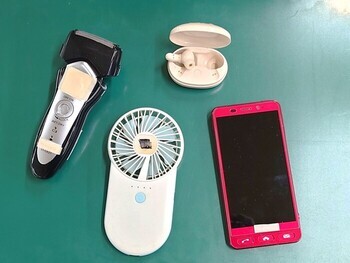
How to dispose of "small electronic devices with non-removable rechargeable batteries"
- For items less than 50 cm: Insulate the terminal parts with tape or similar, and dispose of them by one of the following methods.
1. On the "hazardous waste" day once a month, put it in a transparent or semi-transparent bag and dispose of it.
2. Put it in the "Small Electronic Device Collection BOX" located at 11 places in the city.
Note: For devices with built-in batteries that have swollen, please dispose of them using method 1.
Do not put them in the collection BOX as it may cause a fire. - For items 50 cm or longer: Please dispose of them as "bulky waste." (Reservation required)
Reference Materials
Related Information Links
- Proper Disposal of Lithium-Ion Batteries
- Disposal of Swollen Lithium-Ion Batteries
-
A fire has occurred at the Tama River Clean Center
This is a case of a fire at a waste treatment facility that occurred on June 27, 2025.
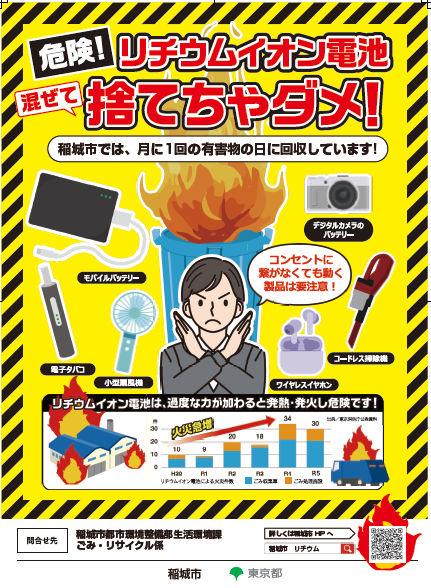
Warning Poster
This page is managed by the Urban Environment Management Department, Living Environment Division
2111 Higashi-Naganuma, Inagi City, Tokyo 206-8601
Phone number: 042-378-2111 Fax number: 042-377-4781
Contact the Living Environment Division, Urban Environment Management Department, Inagi City