


No.165 Policy on Club Activities at Inagi City Junior High Schools


In our city, regarding regional collaboration and regional development of club activities in junior high schools, we conducted surveys of students and school faculty and staff as well as investigations into the actual conditions of club activities at schools, engaged in careful discussions, and have now formulated the "Policy on Club Activities at Inagi City Junior High Schools" at the Board of Education. We report here on the background and the thinking that led to this policy.
Trends and Past Responses of the National and Tokyo Metropolitan Governments
The Ministry of Education, Culture, Sports, Science and Technology, the Japan Sports Agency, and the Agency for Cultural Affairs formulated the "Comprehensive Guidelines on School Club Activities and New Regional Club Activities" in December 2022 to address issues such as correcting long working hours for teachers and securing more diverse and higher-quality activity opportunities for students. This notification designates the three years from FY2023 to FY2025 as the reform promotion period, indicating that the regional transition of club activities, especially on holidays, will be advanced in stages.
In response, the Tokyo Metropolitan Government formulated the "Comprehensive Guidelines on Regional Collaboration and Regional Transition of School Club Activities" and the "Promotion Plan for Regional Collaboration and Regional Transition of School Club Activities" in March 2023, and instructed municipalities to promote initiatives based on this plan.
In our city, the "Policy on Club Activities at Inagi City Junior High Schools" was formulated in April 2017. While recognizing a certain significance in club activities, they are extracurricular activities, and concrete efforts toward reforms to reduce the burden on teachers and establish a sustainable management system had not been undertaken.
Based on the recent notifications from the national and metropolitan governments, we recognize that supporting the healthy growth of students in club activities, reducing the burden on teachers, and establishing a sustainable system are urgent issues. However, it is completely unacceptable that the national government, which proposed the regional transition, attempted to forcibly implement the regional transition with a three-year deadline without addressing issues such as the preparation of regional clubs as recipients, cost burdens, the relationship with existing school club activities, and conditions for participation in higher-level tournaments. The National Association of Mayors expressed concerns, resulting in the withdrawal of the three-year promotion period and the change from a mandatory "regional transition" to a "regional expansion."
Basic Policy of Inagi City: Balancing the Reduction of Teachers' Burden and the Maintenance of School Club Activities
Various methods are being considered nationwide, and there seem to be extreme cases where all club activities are abolished by the end of fiscal year 2025.
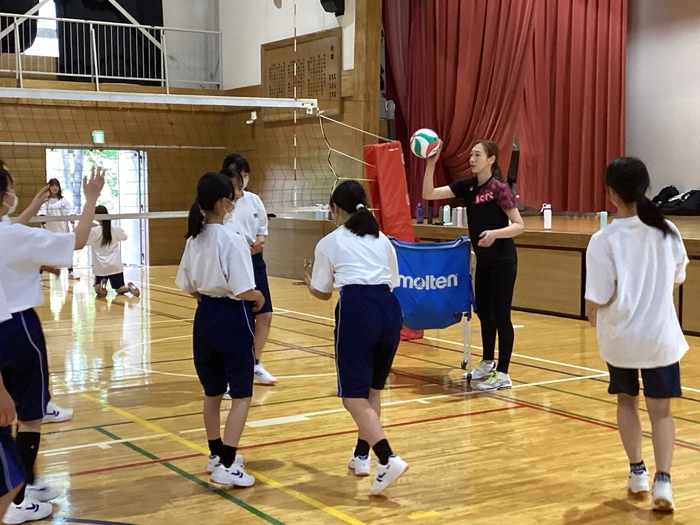
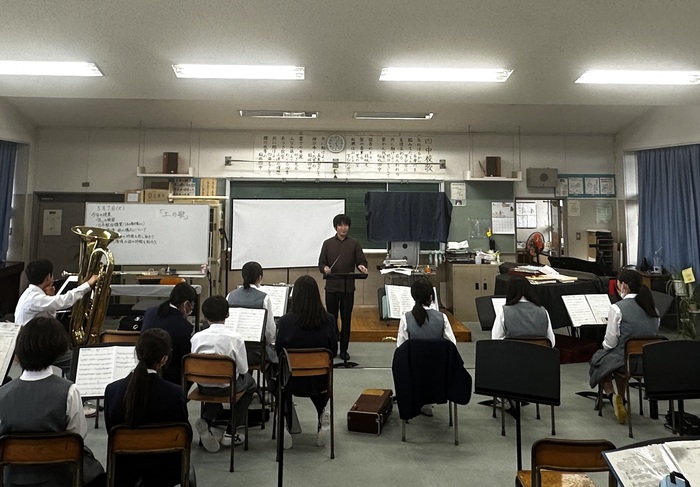
In our city, we will not choose the path of immediately abolishing school-based club activities and transitioning to community club activities. Instead, we will work to reduce the burden on teachers while strengthening external instructors and others, and basically maintain school-based club activities. Additionally, depending on the number of club members and the guidance system at each school, we will establish multiple patterns such as "independent club activities, joint club activities, hub school method club activities, and community club development," and aim to build a sustainable system.
The following reasons underlie this decision.
(1) Emphasis on the significance for students
School club activities have played a major role in the healthy development of students by building relationships beyond grade levels and teaching discipline and cooperation as part of educational activities, and we fully respect this educational significance.
(2) Challenges of Transitioning to the Community
It is difficult to secure organizations and instructors to serve as platforms for activities in all disciplines. A hasty transition carries the risk of creating students who lose opportunities to participate, and there are also issues related to cost burdens such as monthly fees.
(3) Ensuring the Reliable Reduction of Teachers' Burden
Reducing the burden on teachers is an essential issue, but advisory duties also involve elements of student guidance originating from the school, so simply outsourcing everything externally poses problems. We believe that strengthening the technical guidance system while dividing and coordinating advisory duties with teachers is the most realistic approach and will produce results quickly.
Specific Initiatives of the City
Since April 1990, the city has introduced the "External Instructor A" system, involving local human resources in club activities. From October 2022, the "External Instructor B" system was launched, utilizing funds from the corporate hometown tax donation program for individuals with skills and expertise. Moving forward, we aim to deepen collaboration with the community and build a system where the community and schools work together to support club activities.
In this policy, while valuing the educational significance of school club activities, we aim to solve problems with a dual approach that realizes the reform of teachers' working styles, which is a demand of the times. We will seek the best path for students to have more fulfilling activities, and we ask for the understanding and cooperation of all citizens.
This page is managed by the Planning Department, Secretarial and Public Relations Division
2111 Higashi-Naganuma, Inagi City, Tokyo 206-8601
Phone number: 042-378-2111 Fax number: 042-377-4781
Contact the Planning Department, Secretarial and Public Relations Division of Inagi City